
About DQCRANES
We are specialized in supplying kinds of cranes, with rich technical experience for over 20 years,
professional team offers you good service and high quality cranes.
We are specialized in supplying kinds of cranes, with rich technical experience for over 20 years,
professional team offers you good service and high quality cranes.
The quality control system of DQCRANES focuses on process of control, putting the philosophy of crane quality control into design, manufacture, test and all the other processing procedures. DQCRANES adopts advanced testing equipment to supervise each procedure of the crane production and to guarantee the quality of each product of DQCRANES.
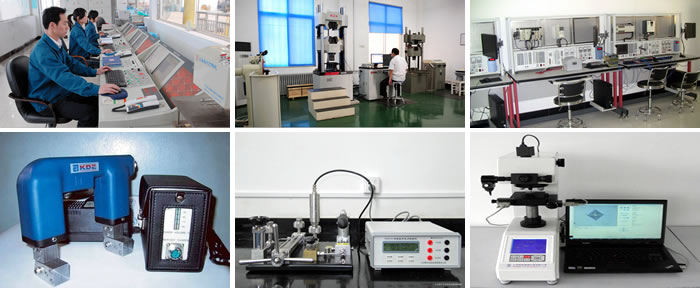
Testing equipment of DQCRANES
Quality is the life of DQCRANES, and the pursuing of superior quality is meant to satisfy the various material handling requirements of customers. In order to service you with high quality material handling equipment, DQCRANES adopts the following crane inspection checklist and conventional quality assurance measures:
The quality of crane steel structure is vital which will be inspected in terms of steel quality and welding quality.
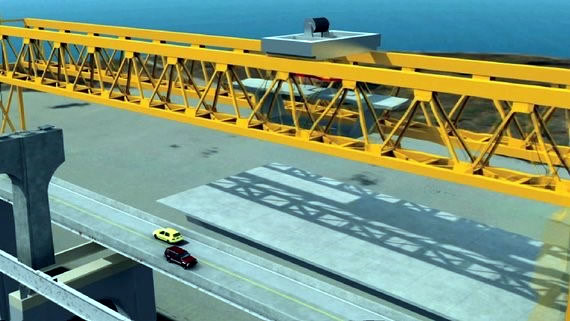
Crane steel structure
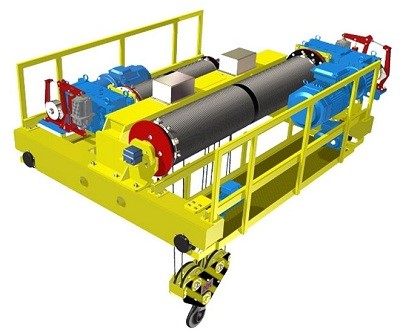
Crane trolley
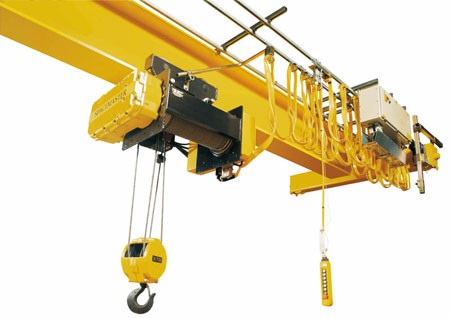
Cranes after installation
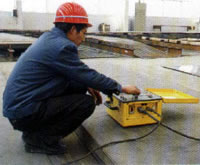 1) Radiographic Testing(RT). X ray, Y ray or neutron ray is used to test the discontinuity of materials and to inspect the inside defect
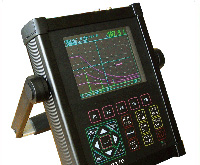 2) Ultrasonic Testing (UT). Ultrasonic is used to detect the internal defects of the metal materials, such as, pipe, plate, bar, and weld with the features of fast, low cost and wide application.
 3) Penetration Testing (PT). It is also used to detect the internal defects of metal materials, just like ultrasonic testing. Double testing are providing absolute quality assurance.
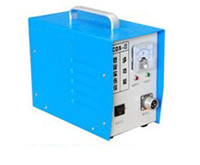 4) Magnetic Testing(MT) . Magnetic leakage and appropriate test is used to find the discontinuity on specimen surface and near surface.
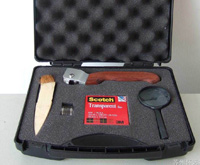 5) Coating testing. The quality of coating is tested in terms of film performance, mechanical properties, i.e, thickness, adhesion, gloss, etc, and special properties, i.e. corrosion resistance, oil resistance, and acid resistance, etc by coating thickness tester, adhesion tester, tester, film girding instrument, etc.
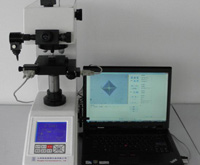 6) Metal hardness testing. The commonly used static testing methods such as HB, HRC, HV, and . HL are used to detect the resistance ability of metal materials.
Post Inquiry